Statistical Data Analysis
Birds vs. planes: A data-driven analysis of wildlife strikes in U.S. aviation
Abstract
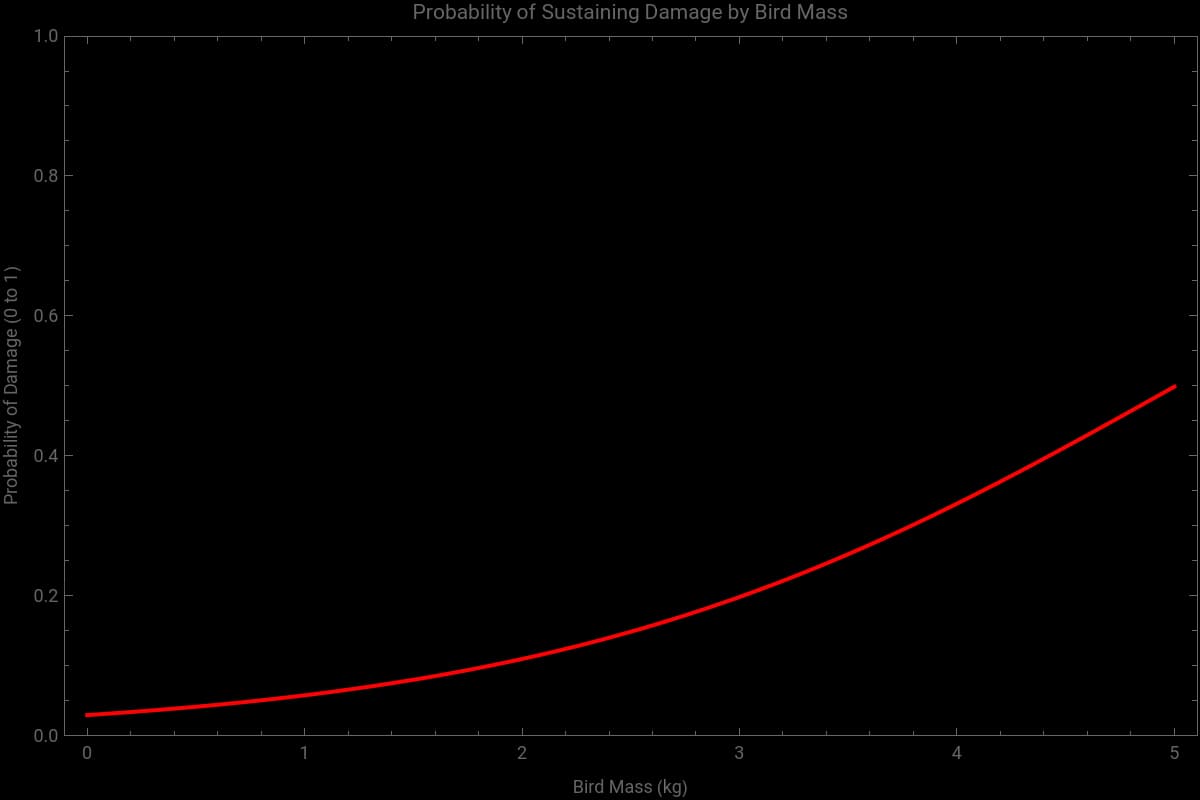
Bird strikes pose a continuous and costly threat to aviation safety. This study analyzes the environmental and physical factors influencing the frequency and severity of aircraft-bird collisions using the FAA National Wildlife Strike Database. Environmental analysis reveals that strike frequency peaks during summer and autumn migration periods, with specific species (e.g., gulls, mourning doves) dominating based on airport geography and surrounding habitats. Operationally, data shows that high collision frequencies occur primarily at lower aircraft velocities (130–150 knots) during low-altitude flight phases (takeoff, climb, and approach). Conversely, collision severity is governed by impact kinetic energy. Employing a binary logistic regression model, this study proves that as avian mass increases, the probability of structural damage escalates significantly (P < 0.001). Despite reporting limitations across different airports, these findings mathematically reinforce that integrating habitat management with physical predictive modeling is essential to mitigate bird strike vulnerabilities.
Read the full essayPublished on Wolfram Community. Research and essay © the author.