Computer Vision
TSVD and autoencoder for image restoration: a comparative study
Abstract
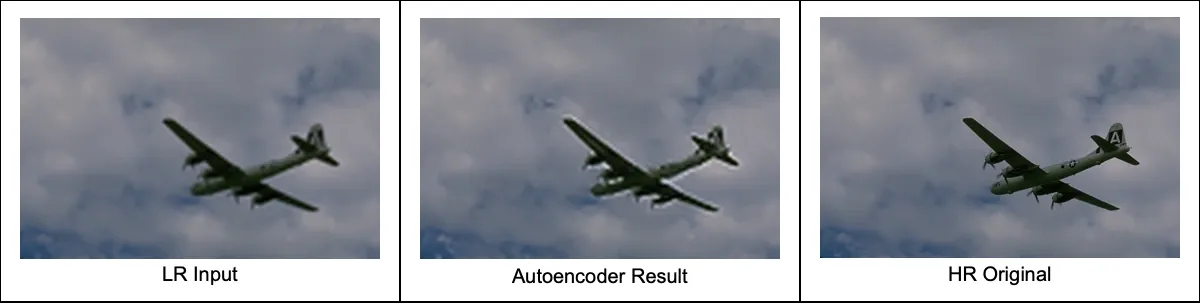
This study compares two image restoration approaches — TSVD and Autoencoder — applied to low-resolution natural images from the BSD100 dataset. SVD is first introduced to reveal the low-rank structure of images — a few dominant singular values carry most of the visual information while the small ones carry mostly noise — which motivates the use of its truncated variant, TSVD. Since both the original high-resolution and low-resolution versions are available, the high-resolution images serve as ground truth for quantitative evaluation. Each method is evaluated using PSNR and SSIM metrics to determine which approach most effectively restores image quality. By comparing a classical linear algebra approach and a deep learning approach under the same controlled conditions, this research aims to provide practical insight into which method works best for general image restoration tasks.
Read the full essayPublished on Wolfram Community. Research and essay © the author.